Work03 / 06Finance2024Sample
Month-End Close
Automated reconciliation that replaced a spreadsheet-driven close with one auditable system.
SampleIllustrative case study with placeholder figures — replace it with your own project.
- Client
- Group finance team, multi-entity company
- Industry
- Finance
- Year
- 2024
- Platforms
- Web
- Engagement
- 5 months(placeholder) · first close on the new system
- 4(placeholder) · people on the team
Before and after
From a workbook nobody dared to sort, to a system with a reason for every match.
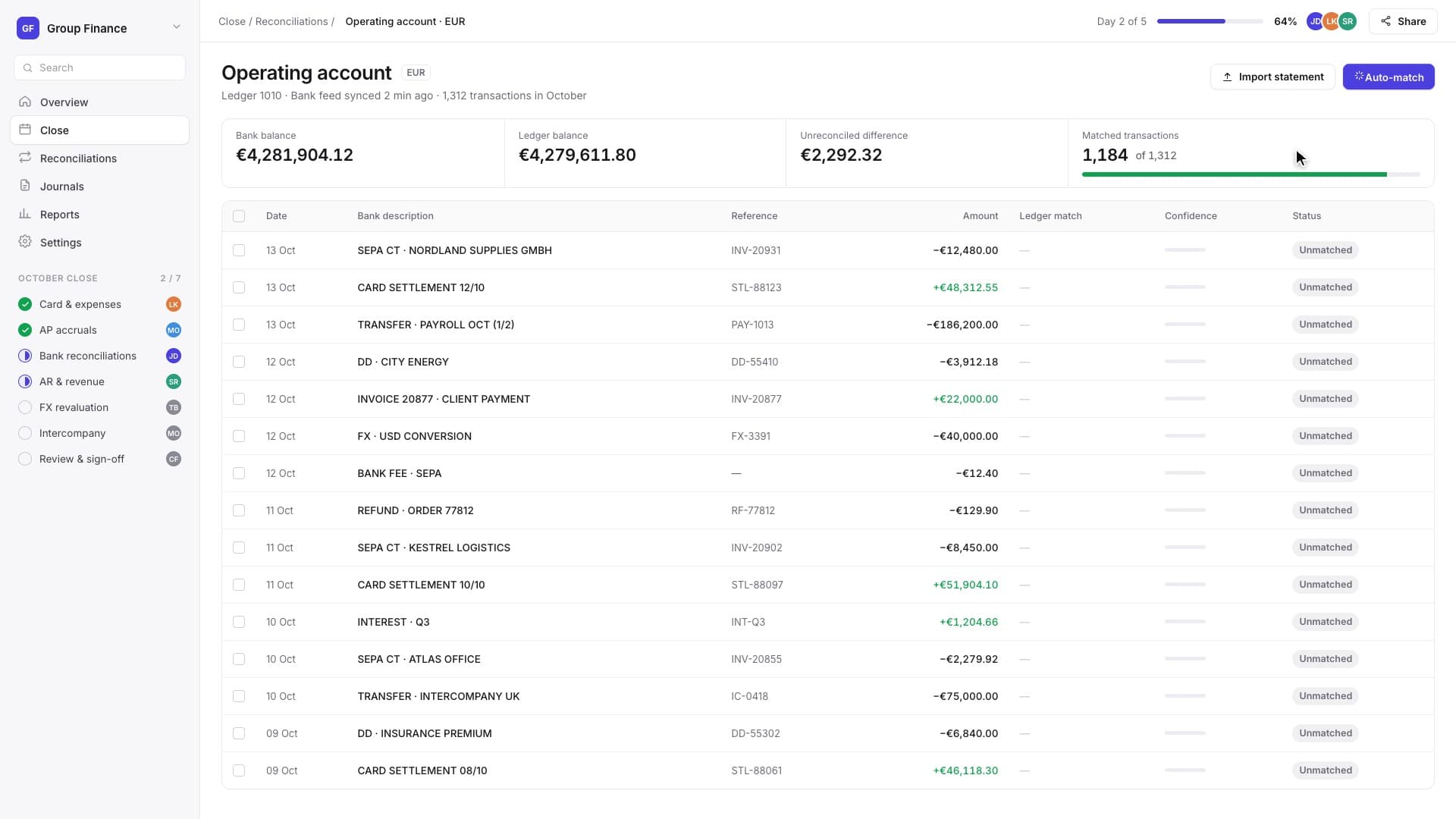
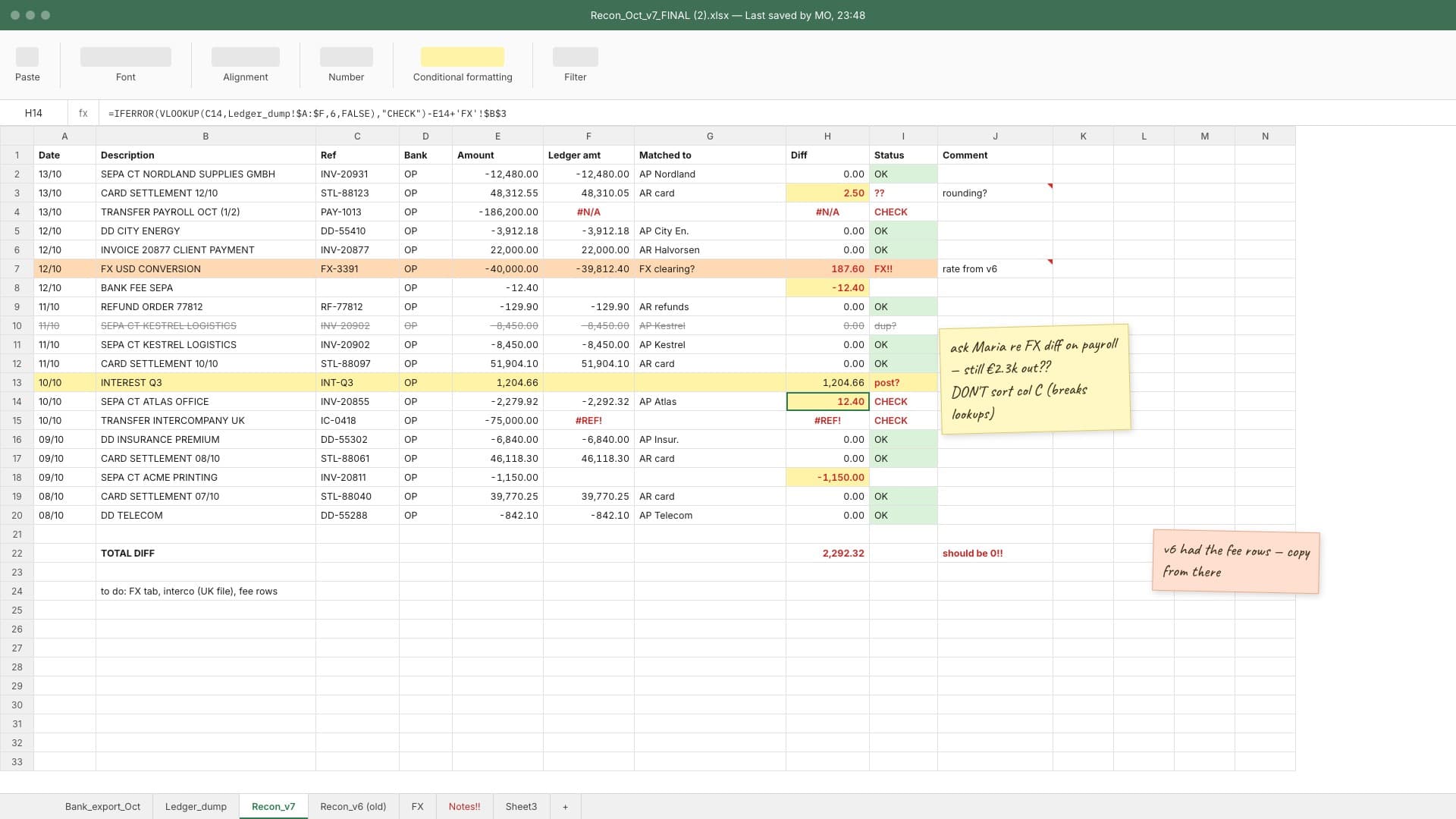
Drag to compare the old reconciliation workbook with the new workspace. Same transactions, same accounts — the difference is where the work and the knowledge live.
The problem
Every month-end depended on a few people and a fragile workbook.
Reconciliations lived in linked spreadsheets with lookups across tabs, manual fixes and notes on what not to touch. Closing took days, and the knowledge sat with two people.
Auditors asked for evidence the workbook couldn't give: who matched what, when and why.
- linked spreadsheets in the close
- 14(placeholder)
- linked spreadsheets in the close
- working days to close
- 8(placeholder)
- working days to close
Our approach
Automate the obvious, explain the rest.
Strategy
Start with the boring 90%
Most transactions match on reference and amount. We automated those first and let the team focus on the exceptions.
UX & UI
A reviewer's tool, not a black box
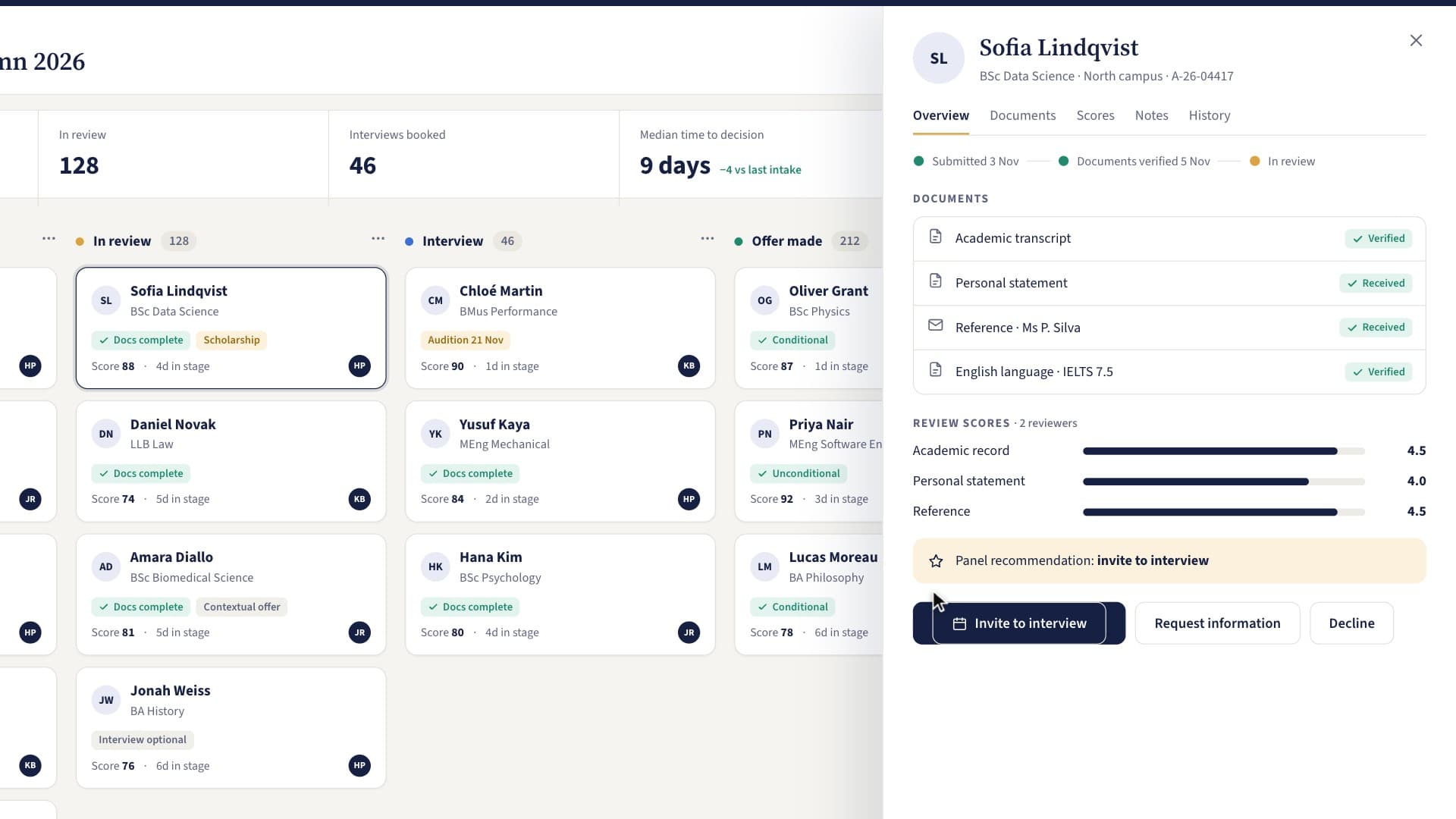
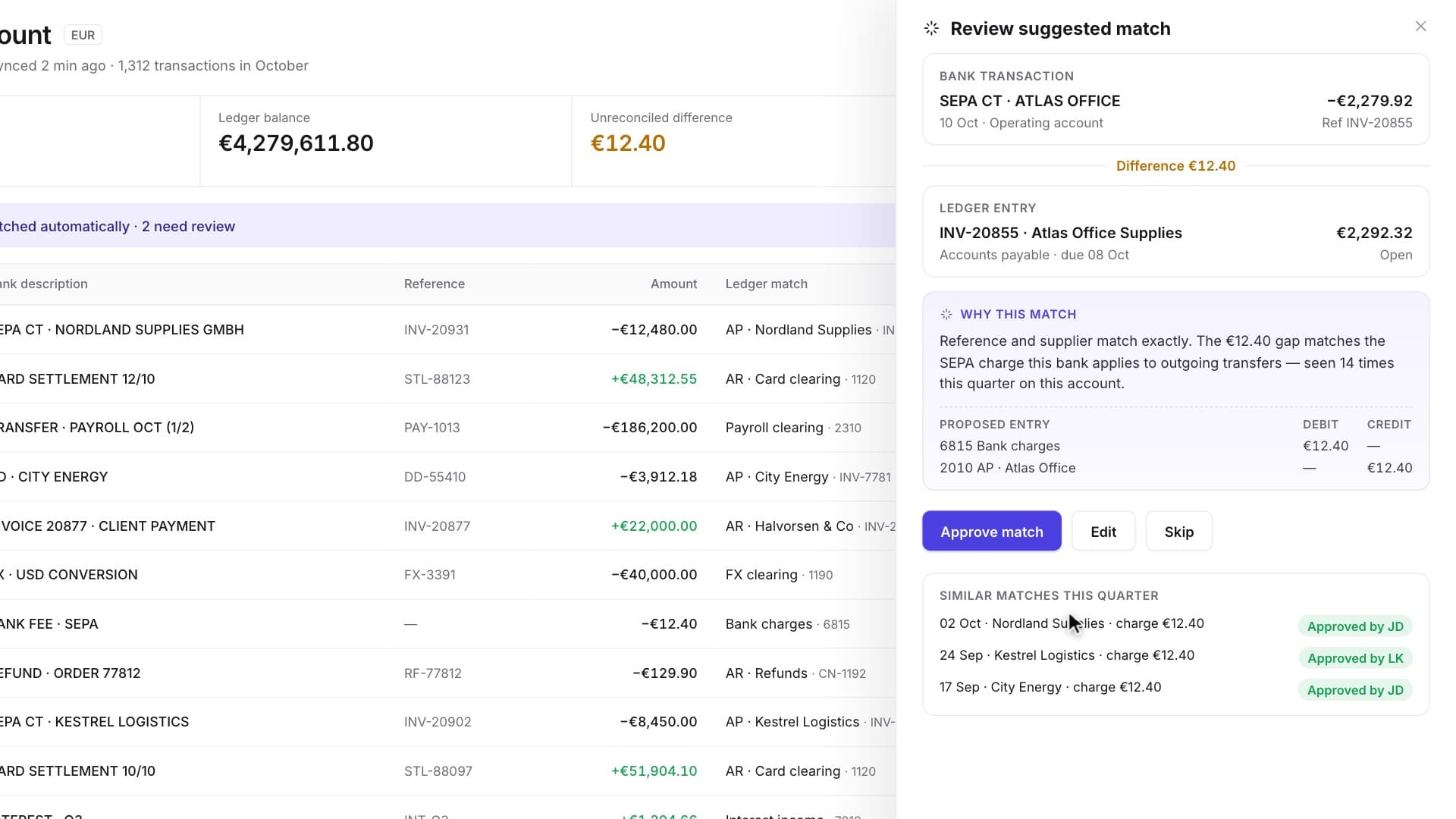
Every suggestion shows the evidence: the rule or pattern behind it, similar past matches and the exact journal entry it would post.
Engineering
Rules first, models second
Deterministic rules handle exact matches. A model scores the fuzzy ones and an LLM writes the explanation — never the decision.
The product
A close the whole team can see
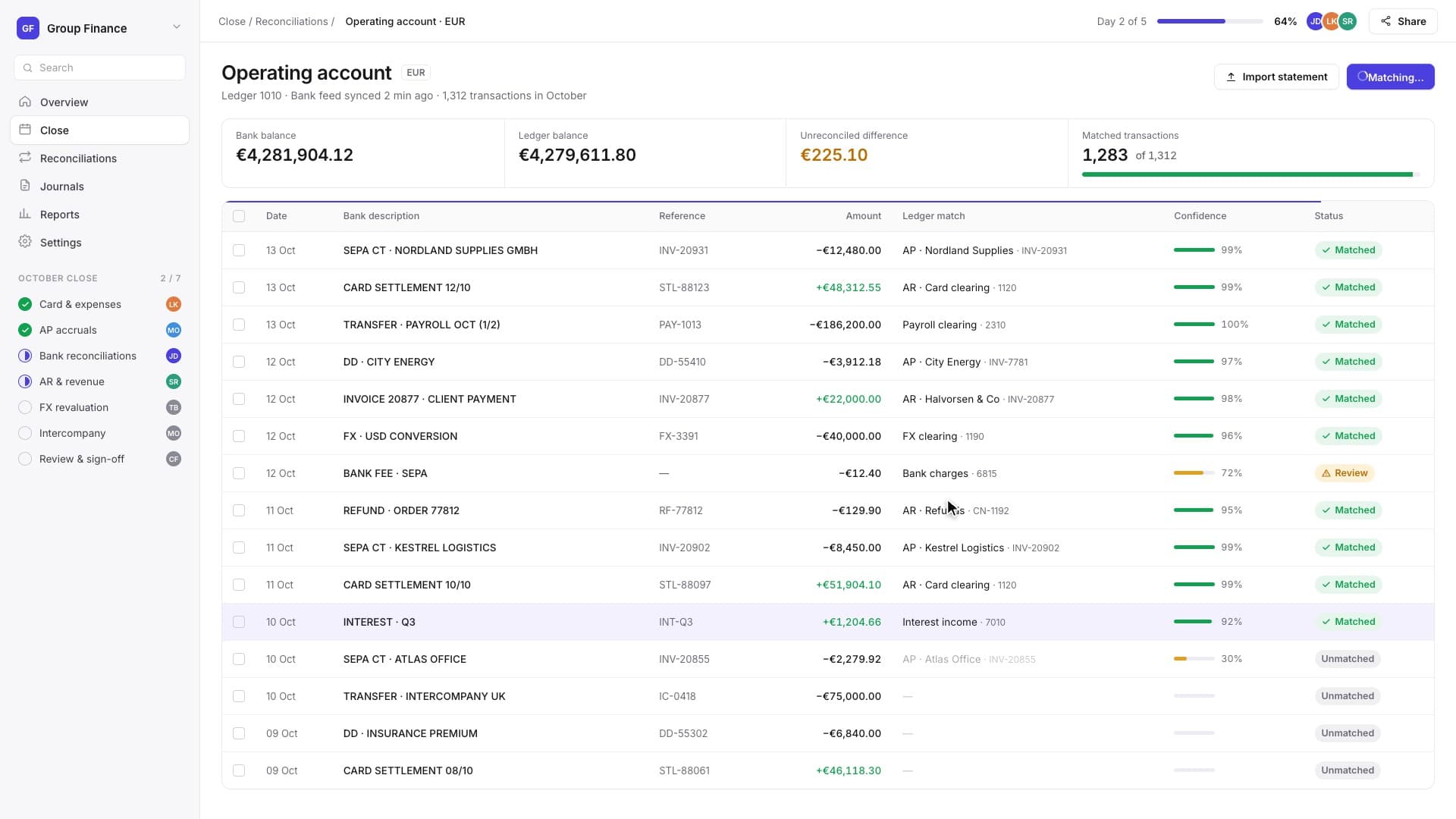
Auto-match with confidence
Bank lines are paired with ledger entries and scored. High-confidence matches post automatically; the rest wait for review.
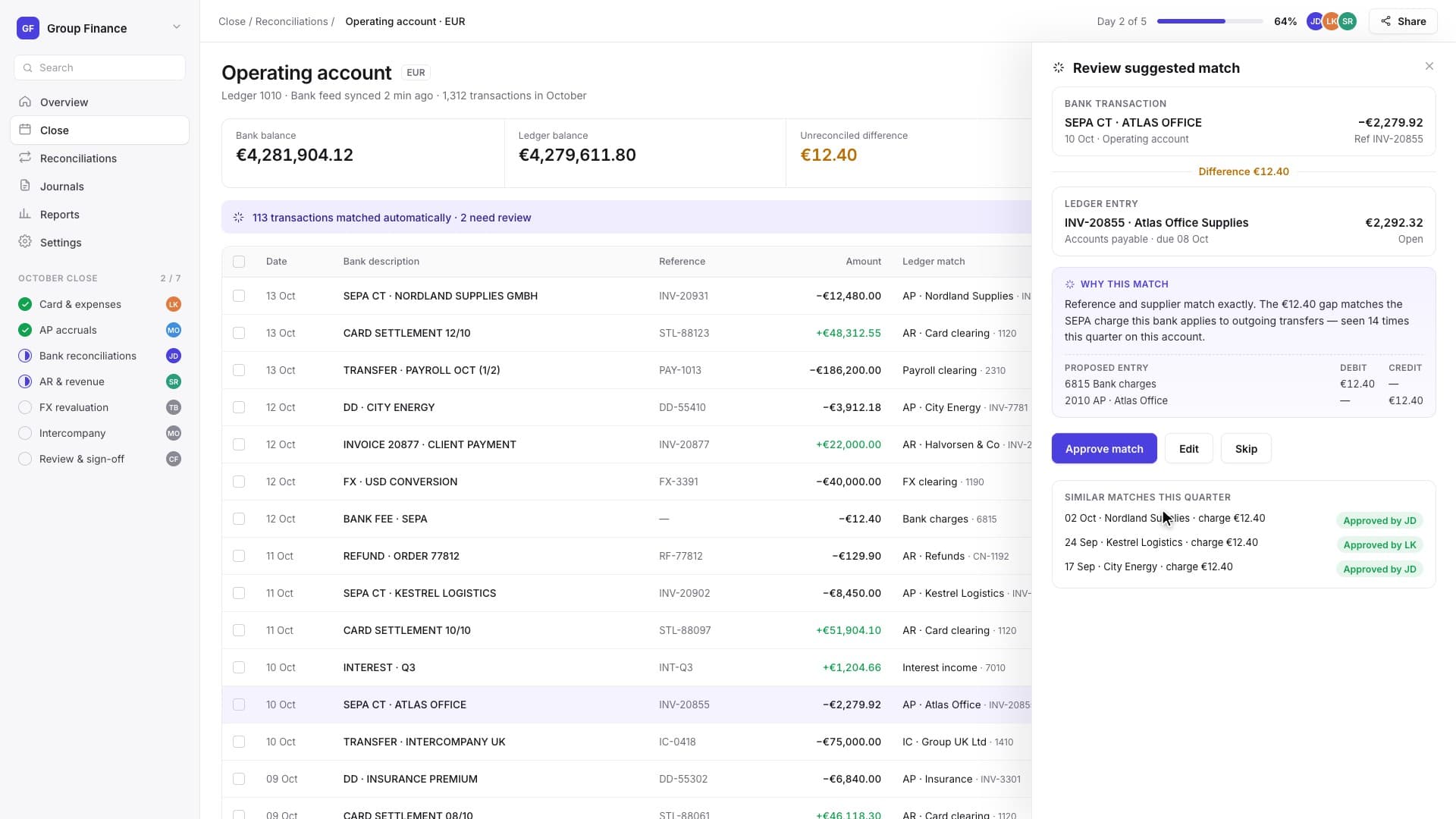
Explained suggestions
Reviewers see why a match was proposed and which entry it posts, then approve, edit or skip.
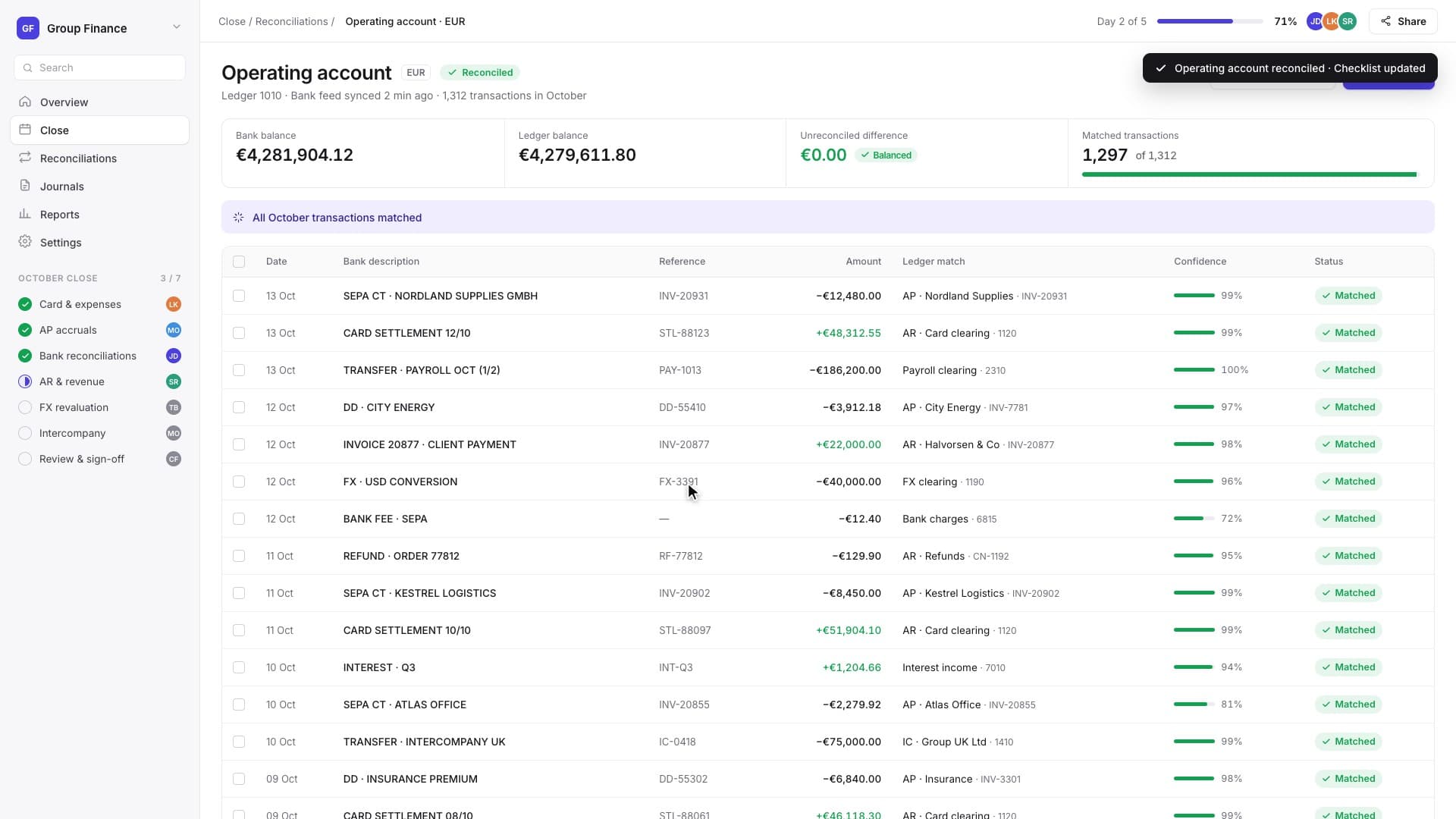
A live close checklist
Reconciliations update the group's close checklist, so finance leadership sees progress without asking.
Architecture
Deterministic where it can be, probabilistic where it must be
Bank feeds and ledger exports land in one database. A rules engine and a scoring model propose matches; people approve them; every decision is written to an append-only audit log.
Explanations can't decide
The language model only writes explanations from structured evidence; matching is done by rules and a scored model.
Evidence auditors accept
Who matched what, when and why is stored immutably and exportable per period.
Spreadsheets at the edges
Imports and exports remain for ad-hoc analysis, but the close itself no longer depends on them.
Outcome
A shorter close that no longer depends on two people.
Most transactions now reconcile without anyone touching them. The rest arrive with an explanation, and the close checklist shows the whole group where things stand.
- to close each month
- −5 days(placeholder)
- to close each month
- of transactions matched automatically
- 92%(placeholder)
- of transactions matched automatically
- spreadsheets in the close
- 14 → 0(placeholder)
- spreadsheets in the close
Technology
- Applications
- Python
- FastAPI
- React
- TypeScript
- Automation & AI
- LLM APIs
- Data
- PostgreSQL
- Infrastructure
- Azure